

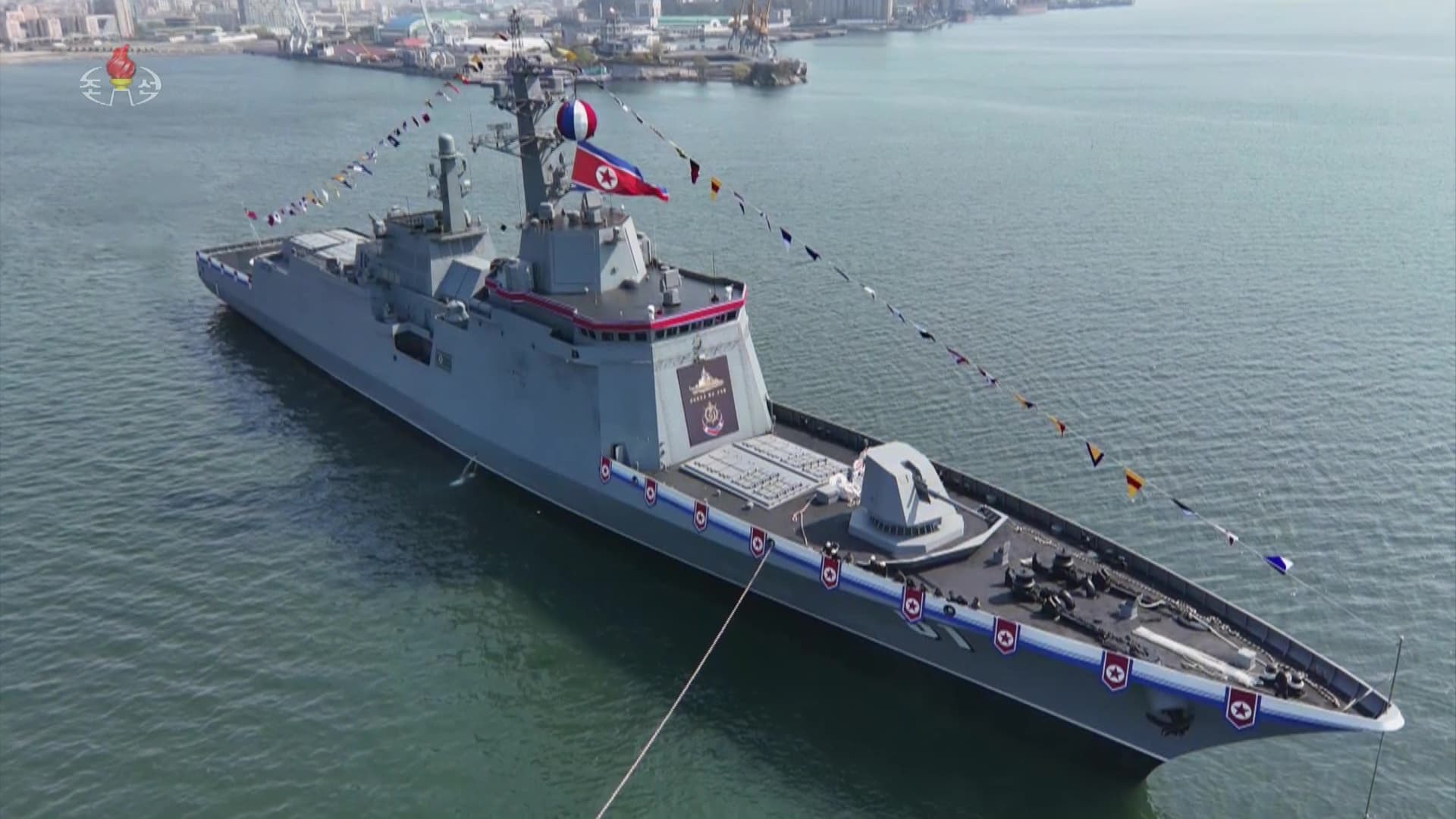
The Choe Hyon-class destroyer appears in state and open-source coverage as North Korea's largest surface warship, with the lead ship named Choe Hyon launched at the Nampo Shipyard and placed into trials.
The class already includes a second vessel named Kang Kon, which suffered a failed launching at the Hambuk Shipyard and was later righted, repaired and relaunched from facilities reported at Najin and Rason.
The design is described as a roughly 5,000 tonne guided missile destroyer measuring about 144 to 145 metres in length with a beam near 16 metres, as reported by state releases and open-source technical assessments.
Armament reported across sources includes a single 127mm or 130mm main gun, a Russian Pantsir-ME point defense system, two 30 mm CIWS mounts, twin 533 mm torpedo launchers and multiple heavy machine guns.
Vertical launching system estimates differ among analyses, with one technical breakdown reporting 74 cells split between bow and stern, another noting 88 cells, and later open-source imagery analysis describing modifications that could yield up to about 88 to 104 missile tubes, according to Naval News and other observers.
Sensors and electronic suites described in reporting include fixed-panel phased array radars, Type 362 air and surface search radar, multiple fire control and navigation radars, hull-mounted sonar, IFF gear and electronic warfare arrays and decoy dispensers.
State media and KCNA coverage said the ship carried out weapons tests at sea, including cruise missile launches and gun firings, and quoted leader Kim Jong Un describing the platform as having anti-air, anti-ship, anti-submarine and anti-ballistic missile capabilities and the capacity to employ strategic cruise and tactical ballistic missiles.
Operational Outlook And Strategic Implications
Open-source analysts including CSIS, IISS and 38 North have noted the ship will require extensive fitting out, manufacturer trials and navy acceptance trials before entering full operational service, and is likely to operate initially from west coast facilities such as Pipagot.
Observers have highlighted rapid changes to the ship's VLS arrangement between appearances, with Naval News documenting a hull extension and the addition of aft cells that altered earlier cell counts and launcher sizes.
South Korean and other analysts have pointed to visual similarities with Russian weaponry and suggested external assistance in sensors or engines, remarks reflected in press reporting and statements attributed to security officials and analyst commentary.
The failed launch, subsequent salvage and on-site legal actions at the shipyard where the accident occurred were reported in state and open reporting, and the recovery effort allowed the vessel to re-enter fitting out and trials at a different yard.


