

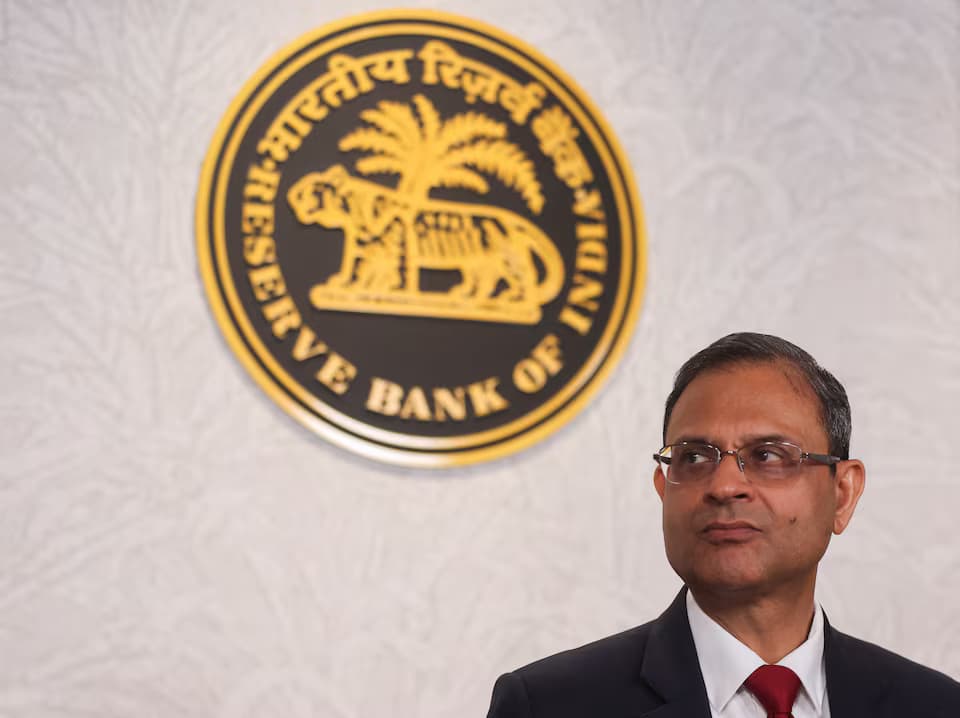
India's central bank holds rates as trade deals ease pressure, the Reserve Bank of India kept the repo rate at 5.25% after a unanimous six-member monetary policy committee vote, Governor Sanjay Malhotra said the monetary policy stance remains neutral.
The central bank has cut rates by a total of 125 basis points since February 2025, including a 25 basis point reduction at the last meeting, and Malhotra said the current policy rate is appropriate while inflation remains benign.
The RBI signalled that future rate moves will depend on growth and inflation outlooks, and it expects growth in the first quarter of the next financial year at 6.9% and at 7% in the following quarter, according to the central bank's projections.
The bank raised its inflation projection for the current financial year to 2.1% from 2.0%, retail inflation stood at 1.33% in December, and the governor warned that geopolitical risks and energy price volatility could push inflation higher.
Market Impact And Policy Risks
The central bank cited the completion of a free trade pact with the EU and a tariff deal with the US as easing an important external headwind, with the US agreement to cut tariffs on Indian imports from nearly 50% to 18% in exchange for India halting Russian oil purchases and lowering trade barriers.
Economists said the deals support a pause in the easing cycle, with Radhika Rao of DBS Bank expecting an extended hold and Santanu Sengupta of Goldman Sachs saying the RBI will likely keep rates steady for at least a year.
Market reactions were mixed after the decision, with India’s 10-year government bond yield rising and the rupee about 0.1% lower, while equity indexes recovered earlier losses and traded little changed, Reuters reported.
Analysts noted liquidity pressures from large government borrowings and the central bank's forex interventions, and Upasna Bhardwaj of Kotak Mahindra Bank said limited room exists for further repo easing while the RBI focuses on ensuring liquidity stability and transmission.
The RBI pledged to remain proactive in liquidity management and signalled open market operations to support policy transmission, while the government plans to borrow 17.2 trillion rupees in the coming financial year.