

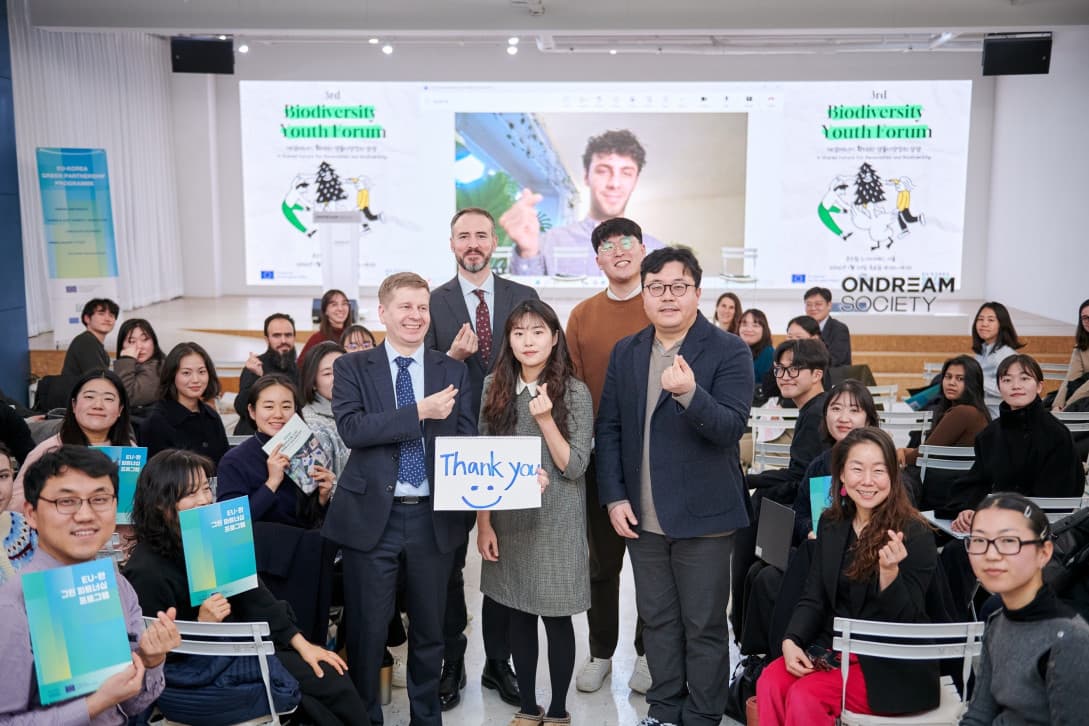
EU-Korea Biodiversity Youth Forum: Driving Integration Between Renewables and Biodiversity appeared as a central theme in recent bilateral exchanges, linking youth outreach with technical dialogue on renewables, biodiversity and plastics policy under the EU‑Republic of Korea Green Partnership.
Officials from the EU and the Republic of Korea met in successive Working Group sessions on Energy, Environment and Climate to deepen cooperation on the green transition, energy security and circular economy, with delegations led by Paola Pampaloni for the EU and senior directors from the Republic of Korea Ministry of Foreign Affairs.
The Green Partnership programme supported youth and public engagement through activities including the University Student Academy on Climate Change, a pop‑up event with a youth environmental NGO, and co‑hosted talks at the Seoul International Eco Film Festival, aiming to bring young Koreans into global climate discussions and multilateral processes.
The programme also organised seminars on Nationally Determined Contributions to exchange progress under the Paris Agreement and on plastic waste solutions ahead of the Intergovernmental Negotiating Committee on a Global Agreement on Plastics, with Busan serving as a focal point for plastic treaty negotiations and related outreach.
Policy Outcomes And International Coordination
The EU and the Republic of Korea used the Working Group platform to review energy priorities, including renewable deployment, methane emission reductions and energy efficiency, and to discuss upgrading bilateral cooperation under a potential EU‑Republic of Korea Green Partnership framework.
On environment matters, partners took stock of the Kunming‑Montreal Global Biodiversity Framework and reiterated the need for full implementation, while exchanging views on circular economy measures and sustainable product design as part of broader pollution and hazardous chemical management efforts.
Both sides highlighted cooperation in multilateral venues, noting coordinated engagement on the global plastics negotiations and biodiversity conferences, and they reviewed activities implemented under the Green Partnership including events on preparation of updated NDCs and joint sessions at ocean protection fora.
The Korean government’s engagement with international organisations also featured, with references to the Global Green Growth Institute and its leadership role, underlining Seoul’s intent to support international project implementation and governance in green growth and climate response.


